East or West, Vitamin E Is Best: Global Secrets of Wellness
From traditional Ayurvedic oils in India to fortified foods, dietary supplements and advanced cosmetic formulations in the United States and Europe, Vitamin E has become a globally recognised antioxidant.
Across regions and cultures, Vitamin E is valued for its ability to help protect fats and cell membranes from oxidative damage. It is also widely used by food manufacturers, cosmetic formulators, nutraceutical brands and personal care companies seeking natural antioxidant support.
However, Vitamin E is not a single molecule. It is a diverse family of compounds with different structures, sources and functional properties.
What Is Vitamin E?
Vitamin E is a family of naturally occurring, fat-soluble compounds that includes:
- Alpha-, beta-, gamma- and delta-tocopherol
- Alpha-, beta-, gamma- and delta-tocotrienol
Together, these eight compounds are commonly described as the Vitamin E family.
Alpha-tocopherol is the form traditionally associated with meeting the human nutritional requirement for Vitamin E. Tocotrienols, meanwhile, are increasingly being investigated for their distinctive antioxidant behaviour, cellular interactions and potential applications in food, cosmetics and nutraceutical formulations.
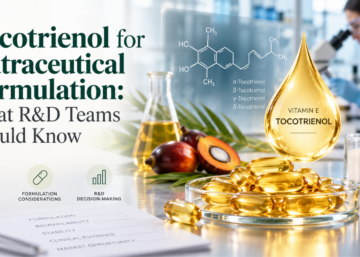
Although tocopherols and tocotrienols share a similar chromanol ring, tocotrienols contain an unsaturated side chain. This structural difference influences how tocotrienols move through lipid environments and interact with biological membranes.
Tocopherols and Tocotrienols: What Is the Difference?
The principal difference between tocopherols and tocotrienols lies in their molecular side chains.
Tocopherols contain a saturated phytyl side chain, while tocotrienols have an unsaturated side chain with three double bonds. Researchers continue to study how this structural variation affects antioxidant activity, membrane mobility, bioavailability and cell-signalling pathways.
Each member of the Vitamin E family may offer different functional characteristics. Therefore, formulators should select a Vitamin E ingredient according to the intended application rather than treating every form as interchangeable.
The Global Journey of Vitamin E
The worldwide use of Vitamin E shows how traditional wellness knowledge and contemporary formulation science can complement one another.
Different regions have developed distinctive ways of incorporating Vitamin E-rich ingredients into food, beauty, nutrition and personal care practices.
Vitamin E in the East: Traditional Oils, Rituals and Restoration
India and Ayurvedic Oil Traditions
In India, plant oils have been central to personal care and Ayurvedic wellness traditions for centuries.
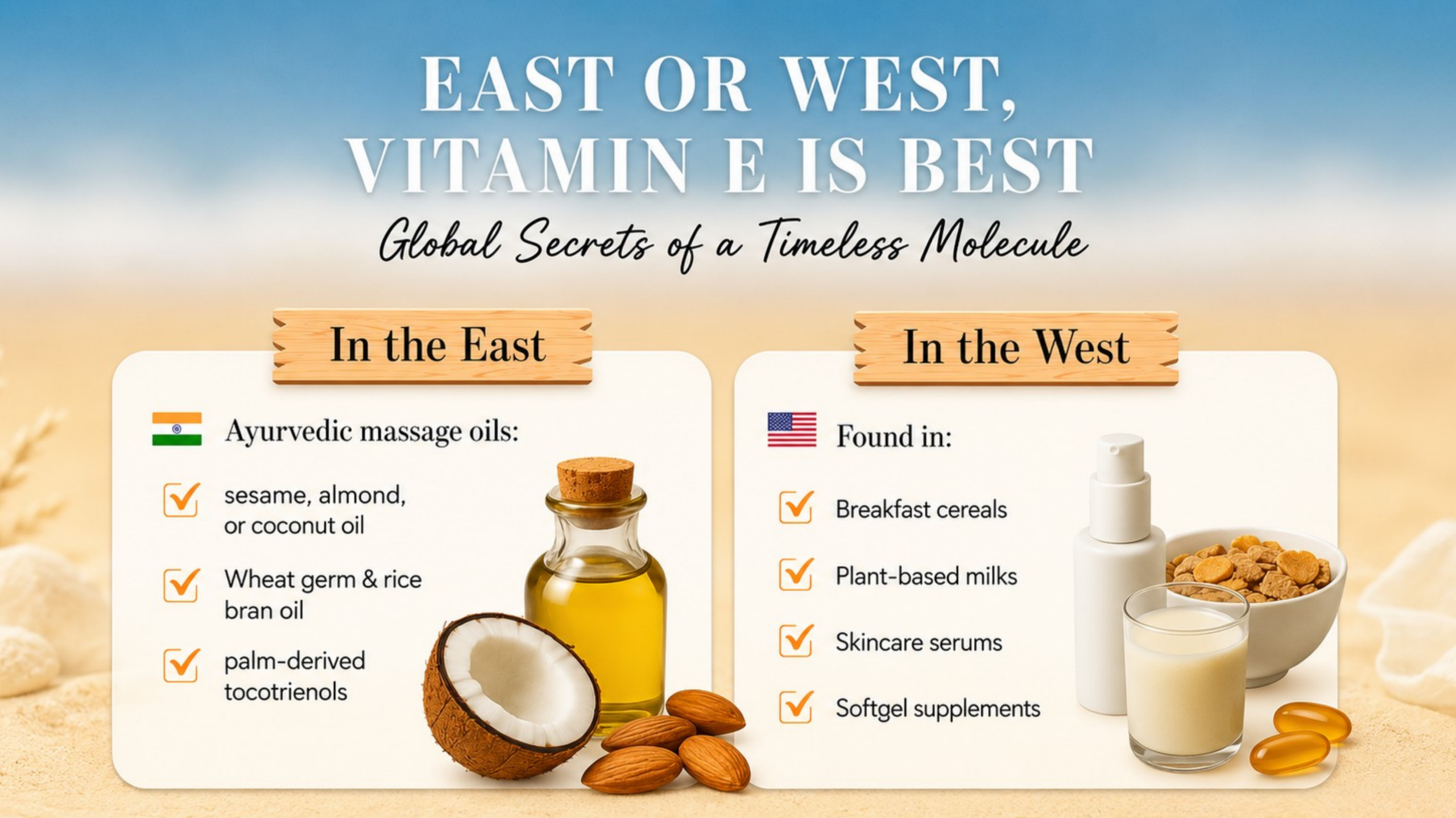
Sesame oil, coconut oil, rice bran oil, sunflower oil and almond oil naturally contain varying levels and forms of Vitamin E. These oils have traditionally been used in massage, scalp care, skin conditioning and daily self-care rituals.
Within modern Ayurvedic and botanical formulations, natural Vitamin E may serve two important purposes:
- Supporting the oxidative stability of the oil-based formulation
- Complementing the conditioning properties of botanical ingredients
Vitamin E can help limit lipid oxidation in oil-rich products, potentially supporting better colour, fragrance and overall formulation quality during storage.
Its effectiveness depends on factors such as the selected Vitamin E form, concentration, oil composition, packaging, exposure to oxygen and storage conditions.
Southeast Asia and Palm-Derived Tocotrienols
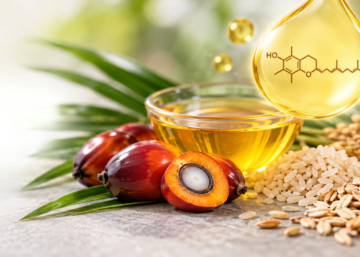
Palm fruit is one of the best-known commercial sources of tocotrienols. Palm-derived tocotrienol-rich fractions commonly contain a combination of tocotrienols and tocopherols.
These ingredients are used or studied in applications including:
- Nutraceutical products
- Functional foods
- Cosmetic formulations
- Personal care products
- Natural antioxidant systems
Tocotrienols have attracted research interest for their antioxidant behaviour and potential interactions with pathways associated with lipid metabolism, inflammation and cellular defence.
These areas remain subjects of scientific investigation, and the strength of evidence may vary according to the individual isomer, dose, delivery system and intended application.
Vitamin E in the West: Fortification and Functional Formulation
In the United States and Europe, Vitamin E is widely used in fortified foods, dietary supplements, cosmetics and personal care products. It is commonly added to plant-based beverages, breakfast cereals, nutrition bars, functional foods and oil-based nutrition products. In these formulations, Vitamin E can enhance nutritional value while helping protect oxidation-sensitive oils and fats. Its overall effectiveness depends on the selected form, dosage, processing conditions and shelf-life requirements.
Vitamin E is also an important ingredient in western cosmetic chemistry. It is frequently used in facial oils, anti-ageing serums, moisturisers, creams, lotions, lip-care products, hair oils, massage oils and body-care formulations. In cosmetic products, Vitamin E supports antioxidant protection, skin conditioning and the stability of lipid-based ingredients. However, the final performance of a Vitamin E cosmetic ingredient depends on its purity, concentration, compatibility and the complete formulation system.
The Antioxidant Role of Vitamin E
Vitamin E is a fat-soluble antioxidant that helps slow lipid oxidation in food, cosmetic and nutraceutical formulations. Uncontrolled oxidation may cause rancid odours, off-flavours, colour changes, nutrient degradation, texture deterioration, reduced stability and shorter shelf life. A properly selected Vitamin E antioxidant system can help preserve product quality and protect oxidation-sensitive ingredients. Its performance should always be verified through formulation-specific stability testing.
Applications of Tocopherols and Tocotrienols
Tocopherols and tocotrienols are widely used or studied for protection from oxidative stress, nutritional support, skin-conditioning formulations, immune function, cardiovascular research, neurological research and industrial product stability. Their performance may vary according to the individual Vitamin E isomer, dosage, delivery system and intended application. Health-related claims should therefore be supported by suitable clinical evidence and applicable regulatory approval.
Vitamin E also plays an important role in industrial formulation stability. It may be used in edible oils, functional foods, nutraceuticals, cosmetic oils, creams, lotions, hair-care products, animal nutrition products and botanical oil blends. In these applications, Vitamin E can help protect oils from oxidation while supporting colour, fragrance, flavour and active-ingredient retention.
Choosing a Natural Vitamin E Supplier
When selecting a natural Vitamin E supplier, formulators should consider the botanical source, tocopherol and tocotrienol profile, purity, potency, stability data, regulatory suitability, batch consistency, traceability, certifications and technical formulation support. The right ingredient is not simply the one with the strongest marketing claim. It is the ingredient that matches the composition, quality and performance requirements of the finished product.
Vitamin E for Clean-Label Product Development
Natural Vitamin E can support clean-label product development by helping manufacturers reduce reliance on certain synthetic antioxidants in suitable formulations. However, replacing an existing antioxidant is rarely a direct one-to-one substitution. Manufacturers should evaluate peroxide value, colour stability, fragrance stability, flavour retention, active-ingredient retention, accelerated shelf-life performance and packaging compatibility before finalising the formulation.
Orah Nutrichem: Natural Vitamin E for Modern Formulations
Orah Nutrichem develops natural Vitamin E and tocotrienol-based antioxidant ingredients for food formulations, nutraceuticals, cosmetics, personal care products, hair care, skincare, botanical oils, animal nutrition and oil-based commercial products. For businesses searching for a natural Vitamin E manufacturer in India, ingredient composition, purity, consistency, technical documentation and formulation compatibility are essential considerations.
The Formulation Verdict
Vitamin E connects traditional botanical wellness with modern formulation science. Its value depends not only on whether Vitamin E is present, but also on its source, isomer profile, purity and intended application. For formulators, the most important question is not simply whether a product contains Vitamin E, but which form of Vitamin E can deliver the right antioxidant protection, stability and performance for the formulation.
FAQs
Vitamin E is a family of eight naturally occurring, fat-soluble compounds: four tocopherols and four tocotrienols—alpha, beta, gamma and delta forms of each. These compounds differ in structure and functional properties.
Vitamin E primarily acts as a fat-soluble antioxidant, helping slow lipid oxidation. This can support the stability of oils and fats and help protect product colour, fragrance, flavour and oxidation-sensitive ingredients.
Vitamin E can help reduce oxidation of oils and fats, which may otherwise contribute to rancid odours, off-flavours, colour changes, nutrient degradation and reduced stability. Its effectiveness depends on formulation, dosage, processing, packaging and storage conditions.
Natural plant oils such as sesame oil, coconut oil, rice bran oil, sunflower oil and almond oil contain varying forms and levels of Vitamin E. These oils are commonly used in traditional wellness and modern cosmetic or botanical formulations.
Palm fruit is one of the best-known commercial sources of tocotrienols. Palm-derived tocotrienol-rich fractions can contain a combination of tocotrienols and tocopherols suitable for different formulation applications.
Yes. Natural Vitamin E can help manufacturers develop clean-label antioxidant systems and potentially reduce reliance on certain synthetic antioxidants where technically suitable. However, manufacturers should conduct stability and shelf-life testing before replacing an existing antioxidant system.
Manufacturers should evaluate the supplier's botanical source, tocopherol and tocotrienol profile, purity, potency, stability data, regulatory suitability, batch consistency, traceability, certifications and technical formulation support.