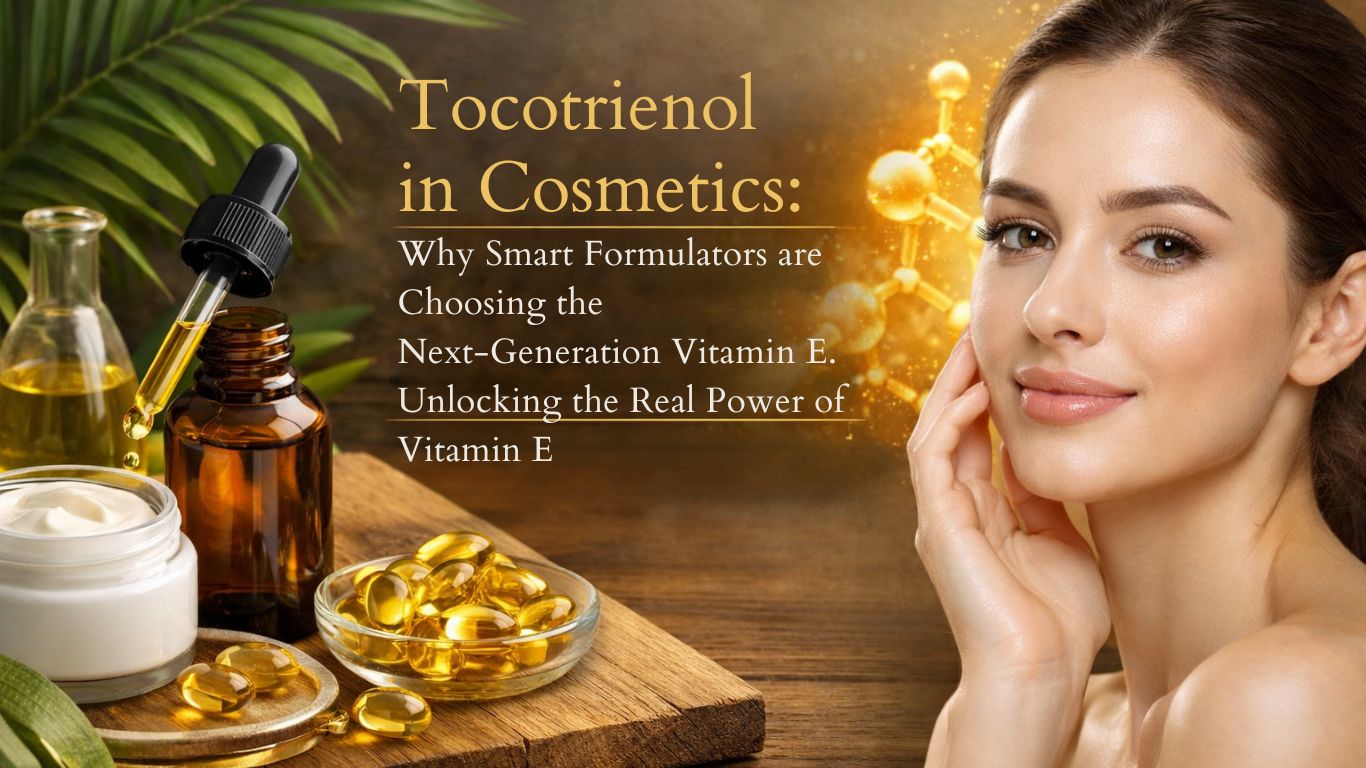
Tocotrienol in Cosmetics: Why Smart Formulators Are Choosing the Next-Generation Vitamin E
Unlocking the Real Power of Vitamin E in Modern Cosmetic Formulations
In today’s clean beauty and performance-driven cosmetic landscape, formulators are constantly searching for ingredients that deliver multifunctional benefits — stability, skin science credibility, and sensory appeal. Vitamin E has long been a staple in cosmetic formulations, but emerging research and formulation experience are shifting the spotlight from traditional tocopherols to a more potent and dynamic form: tocotrienols.
For cosmetic brands focused on innovation, sustainability, and efficacy, tocotrienols represent a next-generation antioxidant solution that supports both product integrity and skin wellness.
Tocotrienol in Cosmetics is gaining strong attention as brands move toward high-performance, science-backed ingredients.
Food scientists and nutraceutical brands are increasingly exploring tocotrienols as natural antioxidant solutions that align with consumer demand for transparency, safety, and wellness-oriented nutrition.
Understanding Tocotrienol: The Advanced Form of Vitamin E
Vitamin E is not a single molecule but a family of compounds that includes tocopherols and tocotrienols. While alpha-tocopherol has been widely used in cosmetics, tocotrienols possess a unique unsaturated side chain that enhances their biological activity and skin penetration ability.
This structural advantage allows tocotrienols to:
- Deliver superior antioxidant protection against oxidative stress
- Integrate efficiently into skin lipid layers
- Support barrier function and skin comfort
- Enhance formulation stability in lipid-rich systems
As cosmetic science evolves, formulators are recognizing that tocotrienols are not merely supportive additives — they can function as active performance enhancers.
Tocotrienol in Cosmetics is therefore gaining strong relevance in modern formulations.
India is also emerging as a key hub for natural vitamin E manufacturers in India, supporting innovation in tocotrienol-based cosmetic ingredients.
Why Tocotrienol Matters in Cosmetic Formulations
- Superior Antioxidant Efficiency
Oxidation is one of the most common causes of cosmetic product degradation. It leads to color changes, off-odors, rancidity, and reduced shelf life. Tocotrienols demonstrate significantly higher antioxidant potency compared to conventional tocopherols, helping maintain product freshness and performance.
- Enhanced Skin Affinity and Penetration
Due to their molecular structure, tocotrienols can diffuse more effectively into the stratum corneum, supporting hydration balance and improving skin feel. This makes them particularly valuable in formulations designed for sensitive or compromised skin.
- Clean-Label Compatibility
With increasing consumer awareness, cosmetic brands are prioritizing paraben-free, sulfate-free, and minimal-synthetic formulations. Tocotrienols align well with clean beauty philosophies by offering natural antioxidant functionality without relying heavily on synthetic stabilizers.
- Stability Support in Oil-Rich Systems
From soap bars and cleansing oils to balms and body butters, lipid-rich cosmetic formats are prone to oxidative degradation. Tocotrienols help protect unsaturated oils and botanical actives, preserving both sensory quality and efficacy.
Key Cosmetic Applications of Tocotrienol
🧼 Soap and Syndet Bars
Tocotrienols help extend shelf life, reduce rancidity in natural oil bases, and support mild skin conditioning benefits even in rinse-off formats.
🌿 Ayurvedic and Herbal Cosmetics
Herbal extracts and cold-pressed oils are particularly sensitive to oxidation. Tocotrienols act as natural stability boosters, enhancing product reliability while maintaining traditional positioning.
💆 Premium Skincare and Wellness Formulations
In serums, creams, massage oils, and spa products, tocotrienols contribute to anti-oxidative skin protection, sensory richness, and premium positioning.
👶 Sensitive Skin and Dermatological Formats
Formulations targeting reactive or delicate skin benefit from tocotrienol’s barrier-supportive and soothing antioxidant profile.
The Innovation Perspective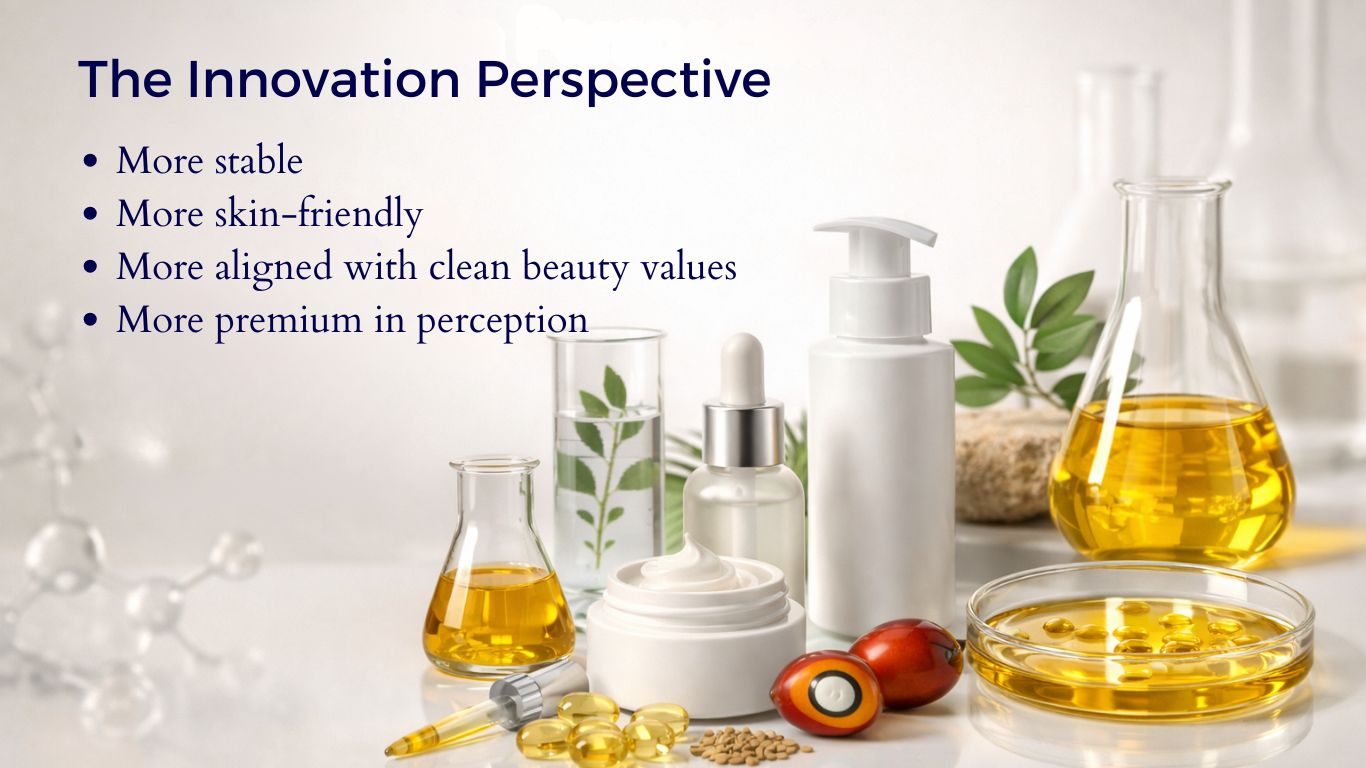
Modern cosmetic development is no longer just about cleansing or moisturizing — it is about ingredient storytelling, science-backed performance, and consumer trust. Tocotrienols support this shift by enabling formulators to build products that are:
- More stable
- More skin-friendly
- More aligned with clean beauty values
- More premium in perception
As ingredient transparency becomes a purchasing driver, incorporating advanced forms of Vitamin E can help brands communicate sophistication and care.
The growing demand for Tocotrienol Vitamin E for Cosmetics is being supported by innovation from natural vitamin E manufacturers in India.
Conclusion
Tocotrienols are redefining how formulators approach antioxidant protection and skin functionality in cosmetic systems. From soaps to advanced skincare, their potency, penetration capability, and clean-label alignment make them a compelling choice for next-generation formulations.
Tocotrienol in Cosmetics is therefore becoming a key focus area for modern formulation strategies.
For cosmetic innovators seeking performance with purpose, tocotrienols offer an opportunity to create products where every ingredient truly earns its place.
Tocotrienol is a powerful form of Vitamin E used in cosmetic formulations to provide antioxidant protection, enhance product stability, and support skin health.
Tocotrienols have an unsaturated side chain that improves skin penetration and antioxidant performance compared to traditional tocopherols.
Yes. Tocotrienols help protect oils and active ingredients from oxidation, which can extend shelf life and maintain product quality.
Tocotrienols are often used in gentle and dermatological formulations due to their antioxidant and barrier-supportive properties.
Absolutely. Tocotrienols fit well into clean beauty concepts as they can reduce the need for synthetic stabilizers.
Even in rinse-off formats, tocotrienols help maintain oil stability and contribute to mild skin conditioning benefits.
Soaps, creams, serums, balms, massage oils, herbal cosmetics, and premium wellness formulations can all incorporate tocotrienol.
Yes. Beyond preservation, tocotrienols are valued for their skin-supportive and formulation performance benefits.
We at Orah Nutrichem are India’s leading manufacturer and direct supplier of Natural Vitamin E, offering it in volumes of 1kg, 5kg, and 25kg at wholesale rates with high-grade packaging. We are rated as a top-quality, leading Indian Natural Vitamin E manufacturing company with global recognition. We offer product samples for testing purposes and cater to the following application areas: Cosmetics, Nutraceuticals, Foods, and Animal Nutrition. We hold the following certifications: GMP Certified, FDA Approved, Halal India Certified, EcoCert Certified, and FSSAI.