Do You Know Romans Used Oil and Scrapers Instead of Soap?
Because sometimes, what we remove reveals more than what we apply.
When we imagine ancient Rome, we picture magnificent bathhouses, flowing fountains, heated rooms, and a culture in which public bathing played an important role. But Roman cleansing looked very different from the soap-and-water routine most of us know today.
Rather than relying primarily on soap for bathing, Romans commonly used oil and a curved scraping tool called a strigil to cleanse the skin.
The Roman Oil-and-Strigil Ritual
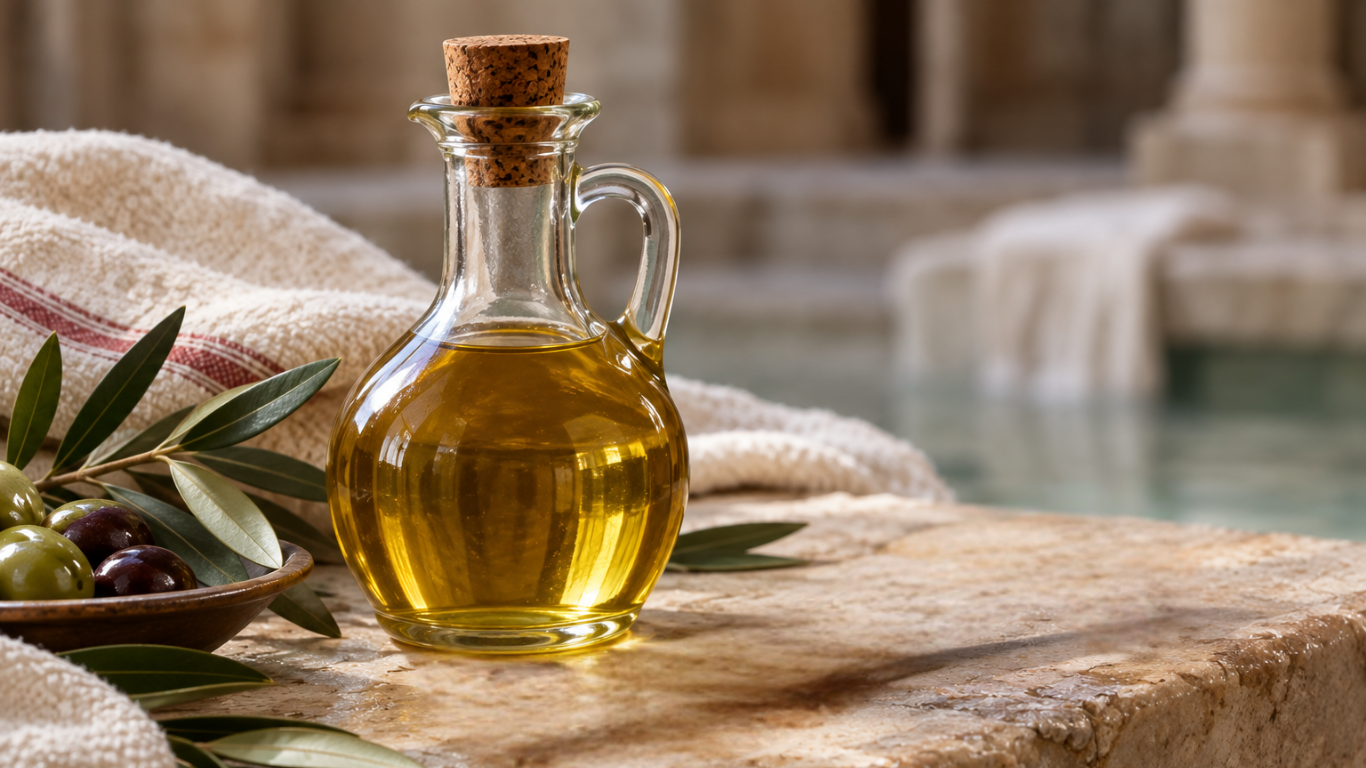
A typical bathing routine could involve applying olive oil to the skin, sometimes accompanied by scented oils or preparations.
The oil helped loosen and collect sweat, dust, dirt, and material on the surface of the skin. This was especially practical in a world where dusty roads, physical exercise, and outdoor activity were part of everyday life.
Then came the distinctive part of the ritual.
A curved instrument known as a strigil was drawn across the body to scrape away the oil along with accumulated grime and perspiration.
The result was a remarkably simple cleansing system:
Apply → Loosen → Scrape → Rinse → Refresh
Long before modern cleansers, exfoliants, and elaborate skincare routines, the Romans had developed their own physical approach to cleansing the body.
Did the Romans Really Not Use Soap?
Not exactly.
Soap was known in the ancient world, and Roman writers were aware of soap-like substances. However, soap was not necessarily the central element of the classical Roman bathing ritual in the way it is in modern bathing.
Oil, scraping, water, heat, and the social environment of the baths formed a distinctive approach to personal care.
That distinction matters.
The Roman bathing experience wasn’t simply an early version of today’s shower. It represented an entirely different relationship between cleansing, the body, water, oil, physical movement, and social life.
Bathing Was More Than Hygien
Roman baths were not simply places where people went to get clean.
Large bath complexes could function as important spaces for social interaction, exercise, leisure, conversation, and relaxation.
People could move through different bathing environments, exercise, meet acquaintances, discuss everyday affairs, and spend considerable time within the bath complex.
In that sense, personal care became part of a much larger cultural ritual.
Cleanliness was connected with community.
Bathing was connected with leisure.
Body care was connected with daily life.
That may be one of the most interesting lessons ancient Rome offers modern wellness culture.
Ancient Ritual, Modern Perspective
Today, skincare shelves are filled with cleansers, exfoliants, oils, serums, masks, and increasingly sophisticated formulations.
The Romans remind us of something much simpler: humans have been thinking about cleansing, skin, touch, oils, fragrance, and personal-care rituals for thousands of years.
Their methods belonged to their own time and should not automatically be interpreted as scientifically superior to modern skincare. But they provide a fascinating glimpse into how ideas of cleanliness and body care evolve with culture.
Sometimes innovation means discovering something new.
And sometimes history encourages us to look again at something remarkably simple.
Because when Romans scraped away the oil, they weren’t merely following a beauty trend—they were participating in a cleansing ritual that became part of everyday Roman culture.