Tocotrienol in Modern Nutrition: From Emerging Ingredient to Formulation Opportunity
The nutrition industry is moving toward greater ingredient specificity. Consumers may see a simple ingredient name on a label, but R&D teams need to understand the molecules behind that name. Tocotrienols illustrate this shift particularly well. They are part of the vitamin E family, yet their structure and research profile differ from the more familiar tocopherols. This makes them an interesting ingredient category for modern nutraceutical development.
Why ingredient specificity matters
Modern product development increasingly depends on precise raw-material definitions. Instead of asking only whether a product contains vitamin E, R&D teams may need to ask which vitamin E form, at what concentration, from what source and with what supporting analytical data. This is particularly relevant when a product is positioned around natural sourcing or specialised nutritional ingredients.
The science behind tocotrienol
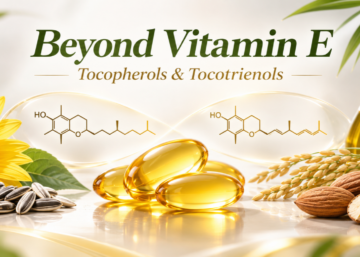
Tocotrienols contain a chromanol ring and an unsaturated side chain. The four tocotrienol forms are alpha, beta, gamma and delta. Their structure differs from tocopherols, which have a saturated side chain. Research has investigated how these differences affect membrane interaction, metabolism and biological activity.
From research to product development
A research finding is not automatically a formulation instruction. R&D teams need to translate evidence into practical questions: what form is being studied, what dose or concentration was used, what delivery system was involved, and is the evidence relevant to the intended application? This evidence-to-formulation bridge is essential for responsible product development.
Quality and consistency
Natural ingredients can vary. A commercial tocotrienol ingredient should therefore have clear specifications for identity, concentration and composition. Batch-to-batch consistency is particularly important when a finished product requires a defined dose.
The role of suppliers
An ingredient supplier can add value by providing more than a product name. Technical documents, analytical data, stability information and formulation guidance help manufacturers reduce development uncertainty. For Orah Nutrichem, educational content around tocotrienol can demonstrate this technical approach.
Conclusion
Tocotrienol’s growing visibility reflects a broader interest in specialised vitamin E ingredients. Its future in nutrition will depend not only on research but also on reliable sourcing, standardisation, formulation science and responsible communication.
FAQs
Tocotrienol is a subgroup of the vitamin E family comprising alpha-, beta-, gamma- and delta-tocotrienol.
Yes. Tocotrienols are members of the naturally occurring vitamin E family.
The key structural distinction is the side chain: tocopherols have a saturated phytyl side chain, while tocotrienols have an unsaturated isoprenoid side chain.
Research has investigated their antioxidant activity, metabolism, membrane behaviour and other biological properties. The strength of evidence varies by outcome and study type.
Source, identity, total concentration, isomer profile, purity, analytical method, stability, storage, regulatory documentation and application suitability are useful starting points.