Vitamin E in Cosmetics: How to Choose the Right Form for Your Formulation
Vitamin E ingredients are widely relevant to cosmetic formulation, but selecting the right form requires more than choosing a familiar name. Tocopherols, tocotrienols and their derivatives can differ in structure, composition, physical behaviour and application suitability. The best ingredient is therefore the one that fits the formulation objective, quality specification and regulatory framework.
Why is vitamin E used in cosmetics?
Vitamin E compounds are lipid-soluble and are associated with antioxidant science. They can be relevant in formulations containing oils and other oxidation-sensitive components. Some vitamin E ingredients are also positioned for skin-conditioning or cosmetic active applications. The exact function depends on the form and finished-product design.
What forms of vitamin E are available?
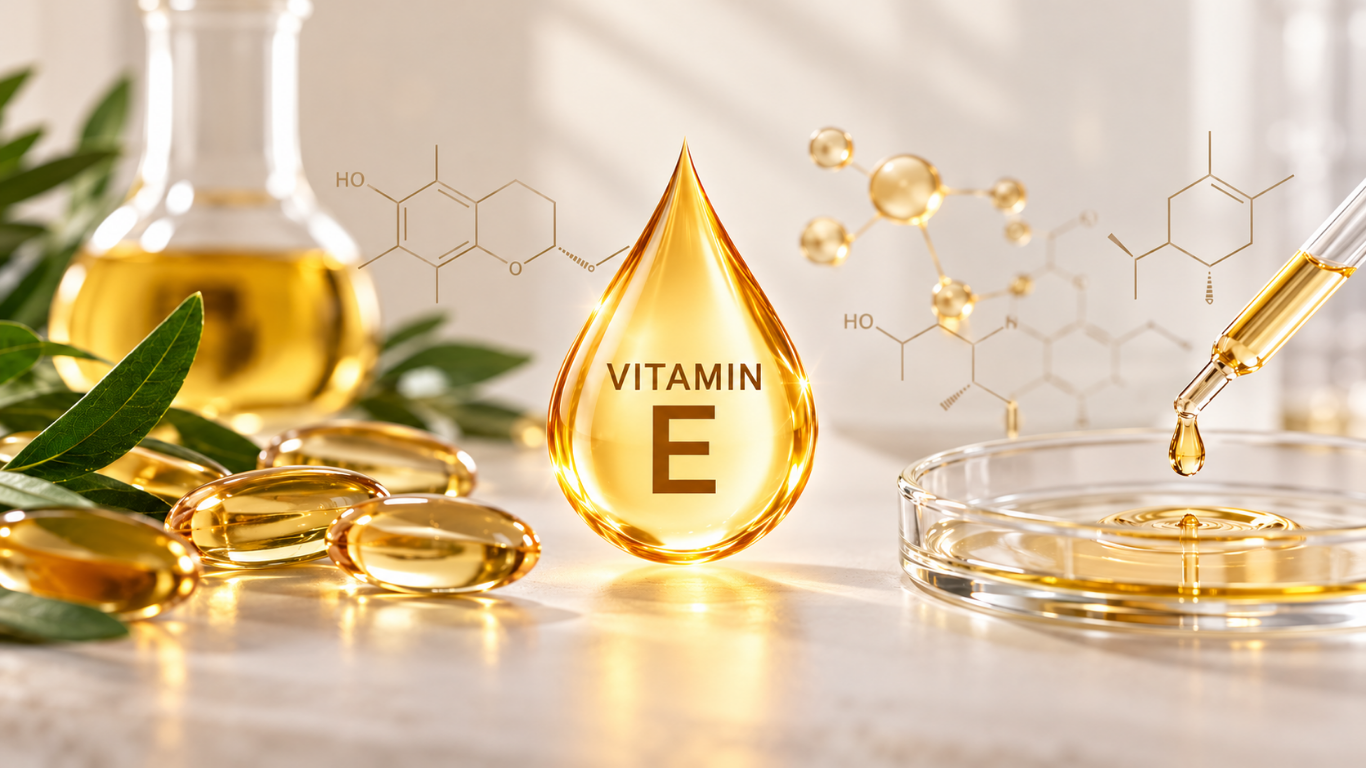
The natural vitamin E family includes four tocopherols and four tocotrienols. Commercial cosmetic ingredients may also include derivatives designed for specific formulation properties. R&D teams should therefore distinguish between the broad vitamin E family and the exact raw material being purchased.
Tocopherol or tocotrienol?
Tocopherol is a well-established cosmetic ingredient, while tocotrienols are receiving increasing attention as a differentiated vitamin E subgroup. The choice should be based on the intended function, ingredient specification, stability, compatibility and evidence supporting the desired claim.
Formulation compatibility
Consider the oil phase, emulsifier system, surfactants, active ingredients, pH where relevant, processing temperature, shear, oxygen exposure, light and packaging. An ingredient that performs well in one formulation may behave differently in another. Small-scale compatibility and stability testing are therefore essential.
Stability and packaging
Vitamin E ingredients and finished formulations should be evaluated under realistic conditions. Oxygen, heat, light and interactions with other ingredients can influence stability. Appropriate packaging can be an important part of the stability strategy, particularly for oxidation-sensitive systems.
How should cosmetic claims be written?
Claims should reflect the evidence. Ingredient-level antioxidant activity is not the same as a clinically demonstrated finished-product benefit. If a brand wants to claim visible improvement in a specific skin parameter, the finished product should be supported by appropriate testing. This distinction protects both scientific credibility and consumer trust.
A formulator's selection checklist
Define the application; select the vitamin E form; confirm identity and concentration; review purity and specification; check compatibility; assess stability; verify regulatory requirements; conduct finished-product testing; and build claims around the available evidence.
Conclusion
Choosing vitamin E for cosmetics is a formulation decision, not a popularity contest. Tocopherols offer established use, while tocotrienols provide a differentiated area of research and ingredient development. By combining molecular understanding with practical formulation testing, cosmetic R&D teams can select the form that best fits their product objectives.
FAQs
Tocotrienol is a subgroup of the vitamin E family comprising alpha-, beta-, gamma- and delta-tocotrienol.
Yes. Tocotrienols are members of the naturally occurring vitamin E family.
The key structural distinction is the side chain: tocopherols have a saturated phytyl side chain, while tocotrienols have an unsaturated isoprenoid side chain.
Research has investigated their antioxidant activity, metabolism, membrane behaviour and other biological properties. The strength of evidence varies by outcome and study type.
Source, identity, total concentration, isomer profile, purity, analytical method, stability, storage, regulatory documentation and application suitability are useful starting points.