𝐀𝐧 𝐎𝐫𝐚𝐡 𝐍𝐮𝐭𝐫𝐢𝐜𝐡𝐞𝐦 𝐏𝐞𝐫𝐬𝐩𝐞𝐜𝐭𝐢𝐯𝐞
In skincare, nutraceuticals, and functional foods, Vitamin E is widely recognised as a powerful antioxidant, but not all forms of Vitamin E are created equal. Understanding the difference between natural and synthetic Vitamin E is essential when selecting ingredients for high-performance formulations. As one of the trusted Vitamin E manufacturers in India and reliable natural Vitamin E suppliers, Orah Nutrichem helps clear the confusion and highlights what makes natural Vitamin E the “real E” for modern skincare, food, wellness, and nutraceutical applications.
𝐖𝐡𝐚𝐭 𝐈𝐬 𝐍𝐚𝐭𝐮𝐫𝐚𝐥 𝐕𝐢𝐭𝐚𝐦𝐢𝐧 𝐄?
Natural Vitamin E is a family of eight compounds consisting of four tocopherols and four tocotrienols: alpha, beta, gamma, and delta. Among these compounds, tocotrienols are known for their unique unsaturated side-chain structure, which supports efficient movement through cell membranes. This characteristic contributes to their antioxidant performance, formulation versatility, and effective skin penetration. Natural tocotrienols are generally sourced from plant-based oils and produced using carefully controlled extraction processes without relying on synthetic petrochemical ingredients.
𝐓𝐡𝐞 𝐒𝐲𝐧𝐭𝐡𝐞𝐭𝐢𝐜 𝐕𝐢𝐭𝐚𝐦𝐢𝐧 𝐄 𝐏𝐫𝐨𝐛𝐥𝐞𝐦
Synthetic Vitamin E, commonly labelled as dl-alpha tocopherol, is manufactured using petrochemical-based processes. While it may provide basic antioxidant support, it does not offer the complete spectrum of naturally occurring Vitamin E compounds. It is generally considered less bioavailable, less effective in skin penetration, and limited mainly to alpha-tocopherol activity. It may also lack the synergistic benefits of the complete Vitamin E family and may not align well with certain natural or clean-label formulations. Natural tocotrienols, on the other hand, are valued for their efficient absorption, cellular distribution, antioxidant activity, and suitability for advanced formulations.
𝐖𝐡𝐲 𝐓𝐨𝐜𝐨𝐭𝐫𝐢𝐞𝐧𝐨𝐥𝐬 𝐀𝐫𝐞 𝐭𝐡𝐞 𝐑𝐞𝐚𝐥 𝐃𝐞𝐚𝐥
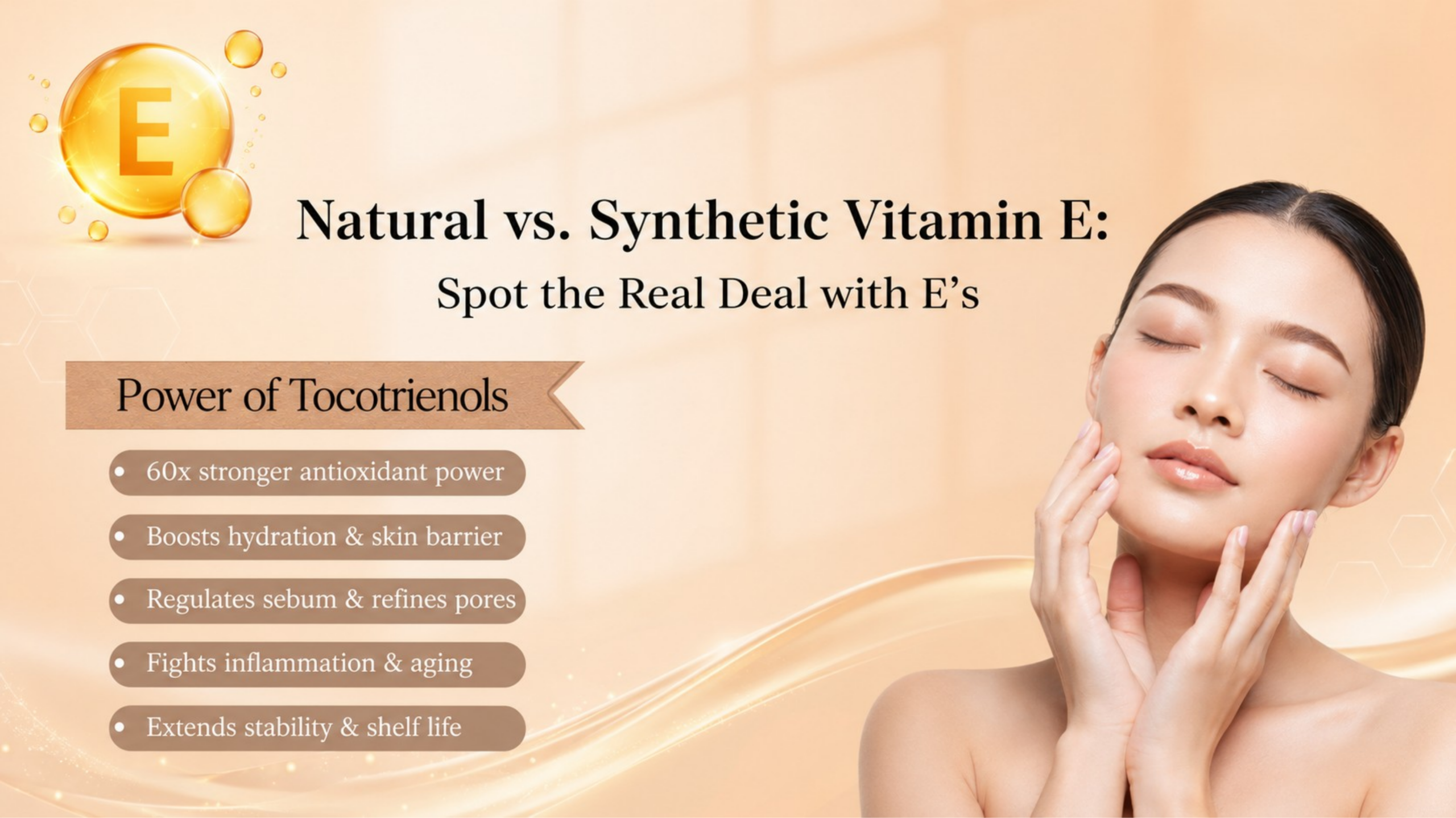
Tocotrienols are known for their powerful antioxidant potential and their ability to support skin moisturisation, barrier nourishment, sebum balance, pore-refining formulations, anti-inflammatory care, healthy ageing, and oxidative stability. Their unique molecular structure also makes them suitable for cosmetics, personal care, nutraceuticals, dietary supplements, functional foods, beverages, wellness formulations, edible oils, and clean-label antioxidant systems. This broad application range makes tocotrienols a highly versatile ingredient for modern product development.
𝐂𝐥𝐞𝐚𝐧-𝐋𝐚𝐛𝐞𝐥, 𝐂𝐞𝐫𝐭𝐢𝐟𝐢𝐞𝐝 𝐚𝐧𝐝 𝐅𝐨𝐫𝐦𝐮𝐥𝐚𝐭𝐢𝐨𝐧-𝐑𝐞𝐚𝐝𝐲
Depending on the product grade and application requirements, natural tocotrienol ingredients may be available with ECOCERT-compliant, Halal-certified, non-GMO, sustainably sourced, and clean-label attributes. They can also be developed without synthetic additives and may align with green chemistry principles. These qualities make natural tocotrienols suitable for formulators seeking transparency, purity, sustainability, and high functional performance.
Choosing Vitamin E is not only about antioxidant protection. It is also about purity, potency, bioavailability, sourcing, and formulation purpose. Tocotrienols represent an advanced generation of natural antioxidants that support innovation across skincare, food, nutraceutical, and wellness industries.
As one of the specialised Vitamin E manufacturers in India and established natural Vitamin E suppliers, Orah Nutrichem proudly manufactures natural Vitamin E tocotrienols designed for clean-label innovation and high-performance formulations. Our natural Vitamin E solutions help formulators create scientifically supported products with improved antioxidant protection, ingredient transparency, and application versatility.
FAQs
Natural Vitamin E is obtained from plant-based sources, while synthetic Vitamin E is manufactured through chemical processes. Natural Vitamin E can include tocopherols and tocotrienols, whereas synthetic Vitamin E is commonly supplied as synthetic alpha-tocopherol.
The Vitamin E family consists of eight compounds: four tocopherols and four tocotrienols—alpha, beta, gamma, and delta forms of each. These compounds differ in molecular structure and biological activity.
Synthetic Vitamin E is commonly identified as dl-alpha-tocopherol or related synthetic alpha-tocopherol forms. Natural Vitamin E ingredients are generally obtained from plant-derived sources and may contain naturally occurring tocopherols, tocotrienols, or combinations of them.
Tocotrienols are members of the natural Vitamin E family with an unsaturated side-chain structure. This molecular structure influences their movement through biological membranes and contributes to their antioxidant and formulation characteristics.
Natural tocotrienols are selected for formulations requiring plant-derived antioxidant ingredients, broad application versatility, clean-label positioning, and naturally sourced Vitamin E. They can be used across cosmetics, nutraceuticals, functional foods, dietary supplements, and wellness products.
Yes. Natural Vitamin E and tocotrienol ingredients can be suitable for clean-label product development, particularly when they are plant-derived and produced without unnecessary synthetic additives. Specific clean-label claims should always be verified against the ingredient grade and certification.
Yes. Natural Vitamin E is widely applicable to cosmetic and personal-care formulations. Tocotrienol-rich ingredients are particularly relevant for antioxidant, moisturising, barrier-support, healthy-ageing, and clean-beauty product concepts.