Vitamin E Ingredient Selection: A Practical Guide for Nutraceutical and Cosmetic R&D
Choosing a vitamin E ingredient can look simple until formulation begins. ‘Vitamin E’ may refer to different molecules, mixtures, sources and derivatives, each with different specifications and applications. A structured selection process helps R&D and procurement teams avoid ambiguity and align the raw material with the finished-product objective.
1. Define the application first
Before choosing the ingredient, define what the product needs. Is the ingredient intended for a nutraceutical product, cosmetic active, antioxidant role in an oil system, or another function? The application determines the relevant specification and testing requirements.
2. Identify the exact vitamin E form
Confirm whether the ingredient is alpha-tocopherol, another tocopherol, a tocotrienol, a mixture or a derivative. Do not rely on the generic term vitamin E.
3. Review source and composition
Ask for botanical source, manufacturing route and compositional profile. For tocotrienol ingredients, review total tocotrienol and individual isomer information where relevant.
4. Check analytical specification
Review assay, identity, purity, physical characteristics and acceptance limits. Confirm the analytical methods used.
5. Evaluate stability
Consider oxygen, light, heat, packaging and interaction with other ingredients. Raw-material stability should be followed by finished-product stability testing.
6. Review regulatory suitability
The ingredient must be suitable for the target market and product category. Claims should be reviewed separately from ingredient identity.
7. Evaluate supplier support
Technical documentation, batch consistency, application guidance and responsive communication can significantly reduce formulation development time.
Conclusion
The right vitamin E ingredient is the one that matches the application’s scientific, technical and regulatory requirements. A disciplined selection process turns a broad ingredient category into a precise formulation decision.
FAQs
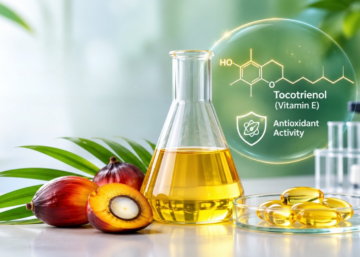
Tocotrienol is a subgroup of the vitamin E family comprising alpha-, beta-, gamma- and delta-tocotrienol.
Yes. Tocotrienols are members of the naturally occurring vitamin E family.
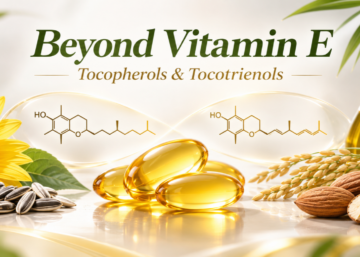
The key structural distinction is the side chain: tocopherols have a saturated phytyl side chain, while tocotrienols have an unsaturated isoprenoid side chain.
Research has investigated their antioxidant activity, metabolism, membrane behaviour and other biological properties. The strength of evidence varies by outcome and study type.
Source, identity, total concentration, isomer profile, purity, analytical method, stability, storage, regulatory documentation and application suitability are useful starting points.